
Atlanta’s 2026 Responsibility, Through the Eyes of Brad Guzan
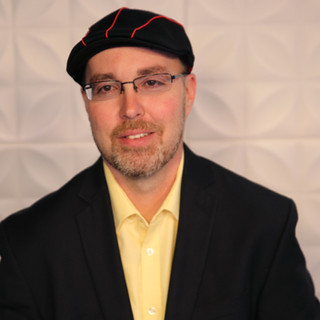
For most of his career, Brad Guzan measured time the way players always do.
One match at a time, training session to training session, the position on the table. Those are the usual reference points that shape a season.
That rhythm defines a playing life. You prepare. You perform. You move on.
In his new role with Atlanta United, Guzan is starting to understand how differently clubs experience time. Sitting inside the building now rather than working on the grass, he sees first hand how important that is in a year like 2026.
This isn’t just another season for Atlanta United. It’s the club’s tenth year on the field, an important milestone worth celebrating. But 2026 carries weight for far bigger reasons as well.
Atlanta is preparing to host the world. The city Guzan now calls home has a massive opportunity in front of it, one that extends well beyond what happens on matchdays.
That opportunity comes with responsibility, and it requires seeing the game beyond Saturdays.
A new perspective for Atlanta soccer in 2026

One of the clearest themes from Guzan’s recent conversations with me is how much his perspective has widened simply by changing where he sits in the building.
As a player, the job is intentionally narrow. The focus stays on the next match while everything else gets filtered out. That tunnel vision is necessary to compete and to cope with the day to day demands of a season.
In his new role, Guzan is now hearing conversations players rarely hear.
He’s listening to how the business side talks about the World Cup and the opportunities it presents to the club. He’s gaining a different understanding of how scheduling disruptions ripple across an entire season. He’s also seeing how clubs plan not just for matches, but for visibility, infrastructure, and long term positioning inside a city that will briefly become the center of the soccer world.
Those conversations always existed. Players simply aren’t meant to carry them.
Now Guzan is.
2026 isn’t about hype, it’s about integration
World Cups create noise. That part is easy.
What they don’t automatically create is connection.
Atlanta’s opportunity in 2026 isn’t just to host matches. It’s to integrate the tournament into the city’s existing soccer fabric in a way that lasts longer than a month. That’s where clubs matter most, because they carry the day to day lifeblood of a city’s soccer culture.
Atlanta United won’t pause in 2026, and it won’t disappear behind the tournament. The club will operate through it.
That means adjusting schedules, managing breaks, maintaining relevance, and connecting global attention to local identity.
Those are structural questions, not emotional ones. For the first time, Guzan is seeing how many departments have to align to answer them.
As a player, the mindset is simple. Prepare for Saturday.
As a club, the mindset has to stretch months and sometimes years ahead.
That shift in thinking is the real story here.
A city hosting the world vs. a club living in it
The World Cup arrives and leaves. Atlanta United doesn’t.
That distinction shapes responsibility.
In 2026, Atlanta will be watched by fans, media, federations, and future hosts who are all trying to understand what soccer means in this city. That interpretation won’t be limited to the tournament itself. It will extend to what comes before it and what remains after it.
Clubs become translators in moments like that. They bridge the gap between spectacle and substance.

Guzan put it plainly. As a player, you don’t think about how the sport itself is affected across the city. You think about performance. Now, he’s hearing how the club thinks about its role inside a larger ecosystem that includes community engagement, business partnerships, and global perception.
That work isn’t glamorous. It’s foundational, and it’s often invisible unless you know where to look.
Why Guzan’s perspective matters right now
Guzan isn’t positioned as a decision maker in 2026 conversations, and that’s not the point. What makes his voice relevant is credibility across boundaries.
He understands what players feel when routines change. He understands what fans expect when attention floods into the city. Now, he’s learning how clubs balance those realities against long term planning. That combination is rare and timely.
He finished playing recently enough to still speak the locker room’s language. He’s been in Atlanta long enough to understand the club’s identity and shape it from the pitch. Now, he’s involved in front office conversations that reveal how complex moments like 2026 actually are.
That doesn’t make him a spokesperson.
It makes him a lens.
Responsibility over spectacle
The easy story in 2026 will be excitement. Atlanta will deliver that, as it always does.
The harder story, and the more important one, is responsibility.
How does the sport grow here after the cameras leave? How does access expand instead of narrowing? How do clubs, communities, and institutions align so the moment becomes long term momentum rather than a short term celebration?
Those questions aren’t answered matchday to matchday.
They’re answered in planning sessions, in meetings with stakeholders, and in conversations players rarely hear and fans almost never see.
Brad Guzan is hearing them now. His voice matters.
That may end up being the most important part of his transition. Not the title or the optics, but the shift from competing inside the game to understanding how the game fits inside a city preparing to welcome the world.
In 2026, Atlanta won’t just be hosting soccer.
It will be explaining itself through it.
That responsibility starts long before the first whistle.


Comments