
Fight to the Right Position: Inside the Physics of Refereeing
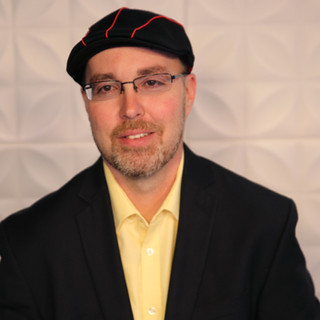
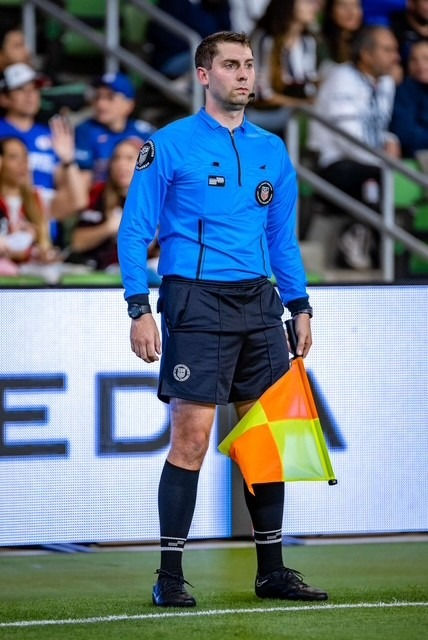
Kevin Huet is watching close to ninety percent of the 2026 World Cup games.
Not just watching. Studying. Tracking the angles, the positioning, the decisions that came a split second before the whistle or the flag. For Huet, a senior lecturer of exercise science at Kennesaw State University and an assistant referee with PRO, every match is both a viewing experience and a kind of professional development.
"Peers is nice," he said with a laugh when the word came up. "But those I strive to be like."
Huet has been officiating since he was twelve years old. More than two decades in, the passion has not abated. What has changed is the layer on top of it: the research, the graduate students, the papers on movement patterns and sprint mechanics. Now the referee work and the exercise science feed each other.
That combination tells you most of what you need to know about how Kevin Huet approaches the game.
One Snapshot
There is a phrase referees use among themselves that almost never makes it out of the locker room or the training session. Huet offered it on SDH AM, and it landed with the clarity of something that should have been in the public conversation about officiating a long time ago.
Fight to get to the right position.
Not just be in the right position. Fight to get there. The distinction is the whole job.
"Just like players that are always running off the ball thinking about where they gotta be strategically," Huet said, "the center referee is really trying to get to where they need to be so that they are in the right place to make the right decision."
The misconception he addressed was not a specific rule or call. It was something more basic. Referees are human beings who see what the human eye can see. They do not have the luxury of the broadcast camera angle, the replay, the sixteen frames per second that catch a contact the official was five yards from when it happened. What they have is one snapshot. One view from one position at one moment, and then a decision.
A player running across their line of sight. A defender shielding the contact at exactly the wrong time. These are not excuses. They are the geometry of the job.
Huet knows the other side of that geometry too. He has served as a video assistant referee, working in an office inside the stadium to examine close plays and signal when a decision requires review. That vantage point, surrounded by every camera angle the broadcast has, was an education.
"It's an eye-opener to a new dimension of the sport," he said. The ref cam footage now being pushed to viewers during the World Cup captures something close to that experience: what the official actually saw, in real time, from the ground. Huet finds it valuable beyond the entertainment value. It closes the gap between what fans assume officials see and what they actually see.
Most of his time, though, has been spent with a flag along the touchline. The technology helps explain the job. The job remains profoundly human.
The Flag Study
Huet came to PRO first as a sports scientist before he became an official himself. That dual identity, researcher and practitioner, runs through everything he does. At Kennesaw State, he and his graduate students are turning the sport's blind spots into data.
One of those blind spots was the assistant referee's flag.
The idea came from a graduate student named William Reed, who had come to refereeing through a nudge from Huet. Referees go through rigorous fitness testing at every level, with sprints, change-of-direction work, and intervals that get more demanding as the level rises. But no one ever trains with a flag in their hand.
Nobody goes to a park and runs sprints while holding a flag. So how much does it actually change things?
The study put it to the test. Participants ran the fitness test parameters holding the flag and without it. The finding on change-of-direction work was counterintuitive. The flag did not slow anyone down. In some cases it acted as a counterbalance, helping with fluid transitions between directions.
The sprint was the issue. Once past the initial acceleration phase, the inability to use the arm as a driver limited how quickly a referee could reach top speed. One arm doing the work of two is not the same thing, and over a sixty-meter sprint it shows.
Huet's practical takeaway was sharp and unconcerned with aesthetics. If an assistant referee needs to get somewhere, they should move however they need to move.
"I don't care how you look," he said. "If you have to run and this flag ends up going up like this, then do it, because you've got to be where you've got to be."
The training implication was equally direct. If referees never practice with a flag, they are not fully preparing for the conditions of the actual job.
Two Different Mindsets
The center referee and the assistant referee are not doing the same job in the same way. Huet, who describes his primary trade as assistant referee work, was careful to draw the line clearly.
The center referee operates as the decision-maker of the crew. Leadership expressed outward, in charge, taking responsibility for the final call. The assistant referee's leadership is different in structure. It is adaptive. It is reading the center referee in front of you, figuring out what they need from the crew, and adjusting to fill the gaps rather than fill the stage.
Some center referees want a highly communicative, collaborative crew. Others are more self-contained and prefer assistants who stay in their lane. Both are legitimate approaches, and an assistant referee who can only work one way is less useful than one who can read the room.
"It's no different than a player going from a defender one game and then you hit the eightieth minute, they're down a goal, and hey, their center back has to go up," Huet said. "Differing positions definitely changes mindset of what we're trying to do and accomplish."
The Peripheral Challenge
If there is one piece of the assistant referee's job that most fans do not fully understand, it is the physics of the offside decision.
Huet explained something called flash lag: the gap between when the eye registers that a ball has been played and when the brain processes it. For an assistant referee keeping level with the second-to-last defender, the ball is often in the periphery rather than the center of vision. The snapshot of the defender's position happens not at the exact moment the ball is played, but a fraction of a second after.
That fraction matters.
Add to that the physical constraint of the position. An assistant referee cannot wander to get a better angle. They are bound by where the second-to-last defender or the ball is at any given moment. They are working in roughly a hundred and eighty degrees of awareness. The center referee is working in three hundred and sixty, tracking the play that is happening and the play that is about to happen.
"We have to practice things like peripheral vision timing," Huet said. The job is not just fitness and positioning. It is visual processing under pressure, at speed, in conditions that are never quite the same twice.
Fatigue and the Decision
The research question that has been bugging Huet most is the one he has not fully answered yet.
How does fatigue affect the decisions referees make?
There is some work out there on the topic, but he wants more. He wants to look at which decisions are made late in matches versus early, what happens to positioning and reaction time as a referee moves into the final twenty minutes, and whether fatigue is a measurable predictor of officiating error.
"When fatigue sets in, doubt starts to set in," he said. "We're a bit slower to be where we need to be. So now not only are we thinking about the decision itself, but I'm not where I need to be, or I'm taking the wrong path. I don't have the proximity."
The emotional and cognitive load compounds the physical. A referee who is tired is also a referee who may be replaying their last decision, who may be priming for the wrong thing, who may be a half-step behind the play precisely when the play is making its biggest demand.
The rain delay during the World Cup match in Philadelphia was the kind of scenario Huet was describing. A two-hour-plus stoppage, a second half resumed in a downpour, and Kylian Mbappé somewhere on the field. The referees who handled that match did not just pass a fitness test. They regulated everything: the physical restart, the emotional reset, the cognitive reload, all at once.
That, Huet said, is what training at the highest level is actually preparing people for.
All Stakeholders
Huet's more important point was about the bigger picture.
He has been carrying a flag since he was twelve. He became a sports scientist. He nudged a graduate student named William Reed toward refereeing and watched that nudge become a research paper. He has combined two things he loves into one practice, and the result is a body of work that takes the referee community seriously at a moment when the sport often treats officials as either invisible or a convenient target.
"I've been able to combine my passion with my purpose in those worlds to help our referees at various levels to either get through fitness testing, meet the demands of the sport, or both," he said. "Understandably, the players, that's who matters, but there is that referee community that does get forgotten about, and we have to do our part to make sure that the game gets the attention to detail it needs."
The game belongs to everyone in it: players, coaches, referees, and fans. And if the referees are willing to be honest about what they can and cannot see, what the flag costs them in a sprint, and what fatigue does to a decision in the eighty-fifth minute, then maybe the conversation about officiating can be something other than frustration on one side and defensiveness on the other.
"I hope referees can be vulnerable enough to ask questions to players and coaches on perspectives," he said. "And I hope that can be reciprocated too."
The camera angle does not belong to the official on the field. But the fight to get to the right position, on every play, for ninety minutes, in any conditions? That part is entirely theirs.


Comments