
From Athens to Auckland to the World Cup
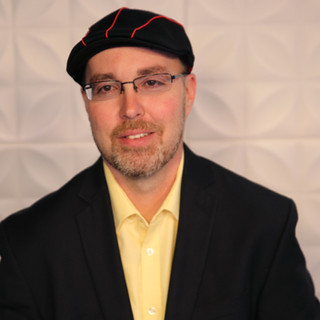
Two World Cups, six professional leagues, and a philosophy built around one idea: the best referee is the one you never had to think about.
He was standing in the tunnel at the Volgograd Arena in June 2018, a former goalkeeper from Athens, Georgia who had become a FIFA referee representing New Zealand, about to walk out for a World Cup match. Three of his four kids were born in a country most people have never had the chance to visit. He had spent years teaching primary school while fitting in flights to professional leagues across six different countries. He was, by any reasonable measure, one of the most accomplished officials in the history of his federation.

And the mark of a great performance, in his line of work, is that the match flows so well the people watching never have to think about him at all.
"That is the secret sauce," he said, sitting down for a conversation with Atlanta Soccer Tonight ahead of the 2026 World Cup. "You see those referees, and you watch the game and go: it's not that I didn't see the referee. It's that they enabled the game in such a way, orchestrated it in such a way, that the creativity was there."
Matthew Conger is not describing a limitation. He is describing what he was after. The best referees, in his view, are the ones who orchestrate a match without anyone needing to notice the orchestration. They enable the creativity of the players. They hold the architecture of the game in place so the beautiful parts can happen. That is the job, and it is worth doing well.
Athens to Auckland
Conger was born in Texas and raised in Athens, Georgia, which puts him in unusual company as an SDH subject: someone who grew up in the same state where the network is rooted and ended up at two World Cups, just not as a player, and not representing the United States.
He played goalkeeper through the Olympic Development Program, the kind of serious youth pathway that plants ideas. When he was around 14 or 15, a coach suggested he try refereeing. The usual pitch: a way to stay involved, make a little cash, stay close to the game. He took it seriously from the start, because that was how he was built.
After aging out of serious playing, he did something that almost nobody does. He ended up taking his whistle abroad. First to Denmark, then to New Zealand, where he arrived as a young American with a refereeing license and eventually found something he had not expected.
"I came across an actual FIFA referee," he said. "And I realized: they're not mythical creatures. There was a pathway forward."
He built his life in New Zealand. He became a citizen. He taught at a primary school. He refereed up through the national system, then into the OFC structure, then into the FIFA program, all while managing the particular strangeness of not being fully from anywhere in the refereeing world. Too American for New Zealand, too Kiwi for the CONCACAF machinery. He described himself, with a kind of settled pride, as "a little bit of an anomaly."
That anomaly ended up at two World Cups, refereed in six professional leagues across the world, and represented OFC in ten FIFA tournaments total. The number of people who have done that is very small.
What the Job Actually Is
One of the things the Conger conversation keeps returning to is how little the public understands about what a World Cup referee actually does and what the structure around them actually looks like.
The selection process is opaque and subjective in ways that even he acknowledges. There is a "party line," a set of expectations around how decisions should be made, and the pressure to conform to it is real. The debriefs are clinical. Thirty clips on a screen, and each referee finds out whether their decisions are supported or flagged as incorrect. One decision in the wrong column can cost you a knockout-stage appointment, or end your tournament entirely.
The compensation is vague. Conger said so directly, without bitterness but without softening it either. Referees commit years of preparation and sacrifice with no guaranteed tournament bonus, no contract clarity, and no formal communication about what they will be paid. FIFA is, as he noted, "making significant profit," and the players benefit from it. The referees who make the whole thing possible are working in a structure that has not caught up with the level it demands of them.
"We could do a much better job of safeguarding that by creating a clear structure of what reimbursement looks like," he said. "Because, of course, they're making significant profit. And the players benefit. And these referees are operating at a professional level."
He is not bitter. He went back for the second one after COVID and circumstance made it far more difficult, locking down New Zealand at exactly the wrong moment, forcing him to move back to the United States in 2022 just to keep his career alive. He understood the challenges of the referee life, or at least accepted it, while still believing the system that produced it could be fairer and more transparent.
The sport he loves has some things to answer for on this front. He is still working to improve it from the outside.
Process as a Philosophy
What makes Conger interesting as a subject is not just the career arc. It is the framework he built around the work, and how explicitly he built it.

From 2016 onward, he became intentional, his word, about developing team culture within his refereeing crew. He studied emotional intelligence. He thought carefully about communication load, about when to speak and when silence served his team better, about how different personality types on a crew needed different handling in high-pressure moments. He moved his assistant referees around based on who was more likely to get drawn into a sideline conversation and who could hold their focus.
He did his master's degree in sport management between the 2018 and 2022 World Cups. He was teaching primary school in New Zealand and refereeing professional leagues on different continents during the same stretch of years.
"For me, my refereeing was very much a creative process," he said. "My focus was to really be in flow with the game, with the creative process of the players."
That is a meaningful way to think about officiating. Not as enforcement, not as policing, but as something collaborative and generative. He talked about "power with" versus "power over," the difference between enabling a match and controlling it. He talked about building rapport with players, finding the level of communication that each person would accept, knowing when a conversation was appropriate and when the decision was simply not negotiable.
"It's a very human experience," he said. "And I think that's the best that we wanna see in there."
What He's Building Now
Conger is back in New Zealand, working in rugby referee development and running a football referee development entity called Total Referee. The idea is to integrate physical development and high-performance referee coaching in a way that the sport has not quite managed yet: more explicit, more structured, more supportive of the pathways that currently rely on implied knowledge and informal transmission.
He talked about referees as the worst cannibals in the world, a phrase he delivered without cruelty, more like a person naming a problem they are determined to fix. The culture of officials eating their own after a mistake, of one wrong decision derailing a career without the same safety net a team provides a player, is something he wants to change. Not by lowering standards, but by building the kind of support structure that allows people operating under enormous pressure to have somewhere to land.
"We need other people to provide that support at times," he said. "It's definitely a space that we can continue to grow and develop."
He was facilitating a professional development session the day before this conversation. He misses the field. He said it the way people say things when they mean them without needing to underline it: the constant challenge of connecting with players, communicating in real time, holding the architecture of a live match together with his team, all of it working toward a game that flows the way the game is supposed to flow.
The 2026 World Cup opens with the country he grew up in as one of three hosts, in cities spread across a geography that will test the tournament's logistics in ways Qatar's compact setup never had to. The referees selected for it will spend the next month trying to do the hardest thing in their sport: be so good at the job that the game belongs entirely to the players.
Matthew Conger, from Athens, Georgia, by way of Auckland, spent a career figuring out exactly how to do that. He is still teaching people.
Matthew Conger is the co-founder of Total Referee. This conversation was conducted for Atlanta Soccer Tonight.


Comments