
The Long Way Around: Tim Ream and the World Cup Build He Gets to Feel

He was walking through the tunnel, leaving training with Charlotte FC, when his phone started going off.
He dropped everything and called his wife. That was the moment he let himself feel it, the thing he had spent years working toward, the roster spot he openly doubted he would ever get.
"It was relief. It was excitement," Ream said. "Almost like a pressure valve, to be completely honest. A little bit emotional."

He is 38 years old. He has been capped by the United States Men's National Team 80 times. He started every match at the 2022 World Cup in Qatar and anchored a backline that held two shutouts. And then, four days after this year's roster was announced, Mauricio Pochettino stood in front of reporters at a press conference in Fayetteville and told the world something that even Ream, in quieter moments, probably didn't let himself fully expect.
Tim Ream is the captain of the 2026 United States World Cup team.
"This is more than a dream come true," Ream said, barely able to finish the sentence. "I've done everything possible to be a part of this group, to help this group along, and I'm just really, really grateful."
The contrast with 2022 is the thing worth sitting with. Ream has been open about where his head was during that cycle. He didn't think he was in the picture. He had no "will I or won't I" anxiety because he genuinely expected the answer to be no. Qatar happened, and it was extraordinary, and when it ended, he allowed himself to think it might be the whole story.
"I know I said after the last World Cup that, OK, it could be my very first and last," he said on The Guuuzan Show in March.
And yet here we are.

The buildup this time was completely different. He felt all of it. The decisions, the training camp work, the conversations with coaches, the long stretch of not knowing. "The buildup is, was, and is the worst part," he said in Fayetteville this week. At 38, with a roster full of players a decade and a half younger, nothing about his inclusion was assumed. He had to live inside that uncertainty for months, and when the phone blew up in the tunnel, that was the whole weight of it finally releasing.
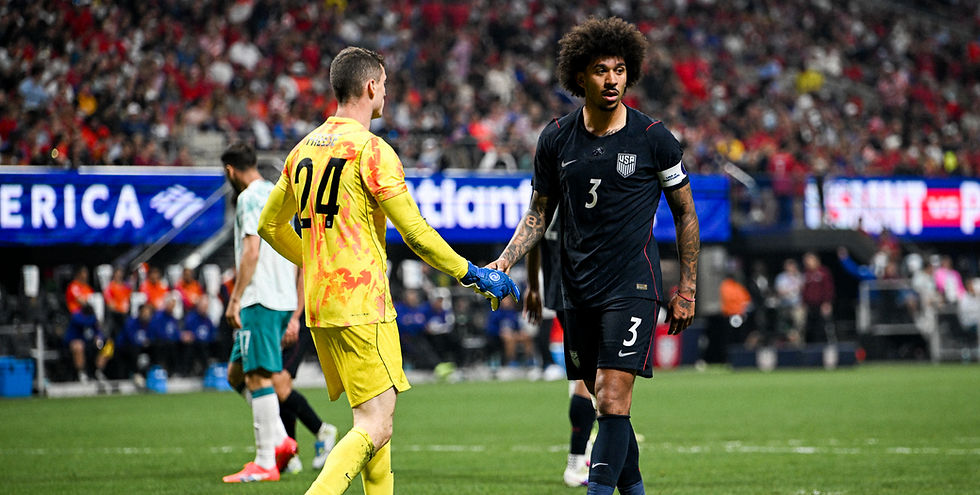
That's what makes the captain's announcement land differently than a ceremonial gesture. Pochettino didn't hand the armband to someone who coasted into camp. He gave it to the guy who kept his place through multiple coaches and into this rebuild, who led the team through the 2025 Gold Cup, who has been named captain 26 times and sits eighth on the all-time list. In 23 matches under Pochettino, Ream wore the armband 16 times. The consistency wasn't accidental. It reflected something Pochettino saw from the very beginning.
Pochettino spoke about him at the press conference the way coaches rarely talk about players in public settings. Ream was his first captain when the job started, nearly two years ago in Austin for a friendly against Panama. What Pochettino kept coming back to wasn't leadership on the field, where the armband is easy to wear. It was the harder, less visible version: what a captain does when he's not playing.
"I said to him, if you are on the field, you are going to use the armband," Pochettino said. "But if you are not, and you are on the bench or off the field, I know that you are going to act like a captain too. Because sometimes captains on the field are very good, very happy, so nice, so helpful. But when they don't play, they don't act like a captain."
Pochettino told a story about managing Kelvin Davis at Southampton. Davis was the club captain, a veteran goalkeeper who had given years to the club, but had lost his starting spot to Artur Boruc. He wasn't playing. He could have checked out, sulked, made things difficult. Instead he kept showing up, kept pushing the group, kept acting like a captain even without the minutes to show for it. Pochettino never forgot that. That kind of loyalty to something bigger than your own situation, he said, is what real captaincy looks like. That is what he said he found in Ream.
"Playing or not playing, he's the captain," Pochettino said. "It's not that he is going to be for sure in the starting eleven. But it's important that always, with the armband or without the armband, he's the captain, and he's a great, great guy."
It is worth acknowledging the skeptics, because they exist and they haven't been entirely wrong. Former USMNT striker Herculez Gómez has been vocal about his concerns that Ream's physical limitations at 38 were a liability the team couldn't afford in a tournament. The conversation was real.
Pochettino's answer was to name him captain.

That decision carries weight beyond the symbolic. This is one of the youngest rosters the USMNT has ever brought to a World Cup. Christian Pulisic is 27 and the elder statesman of the attack. Several key contributors are 23 or younger, players who have never been inside a World Cup camp, never felt the specific pressure of a knockout match on the biggest stage in the sport. Ream has. He has been through two World Cups, Gold Cup runs, coaching changes, roster battles, and more training camps than most of his teammates have years in professional soccer. Pochettino didn't just need someone to wear an armband. He needed someone who had already been in the moments this team is about to face, someone the younger players could look to when the tournament gets hard and the noise gets loud. That kind of steadiness doesn't show up in a stat line, but it shows up in a locker room, and it shows up in a tournament. Pochettino has decided it is worth more than what might happen on a single set piece.

He didn't think he was going to be a professional until his third year of college. He was 21, and it was the first time he genuinely believed he had a shot. Not modeled after anyone, not chasing an idol. Just himself, figuring it out later than most. He went in the second round of the 2010 MLS SuperDraft, 18th overall, and played every minute of every game his rookie year with the New York Red Bulls under Hans Backe.
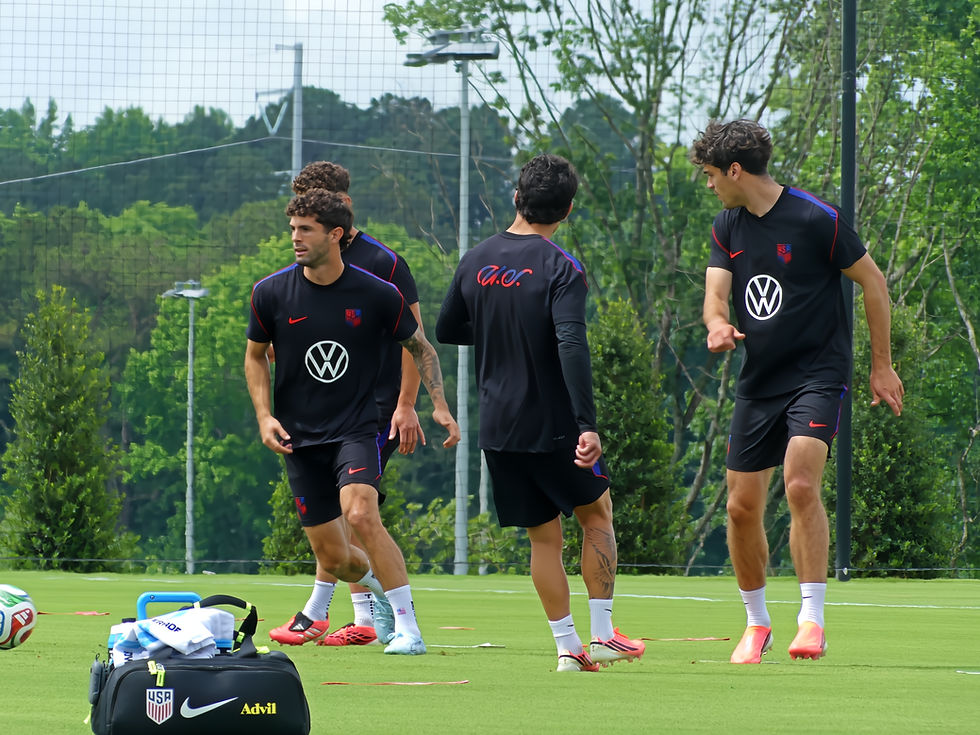
Two years later he crossed the Atlantic, and he stayed for twelve and a half years. Bolton Wanderers, then Fulham, riding the Championship and Premier League elevator more than once over. He and his wife built their life there. All three of their kids were born in England. Speaking on Atlanta United's Guuuzan Show in March, taped while the USMNT was training at Children's Healthcare of Atlanta Training Ground ahead of the Belgium friendly, he talked about what he was most proud of from that time abroad.
"The thing I'm most proud of is when things weren't going well, that I didn't run and hide," he said. "A manager would change and say, you're not really for me, and we're gonna play other players. And for me, it was head down, pushing through all of that, and still coming out on the other side and being a player that was relied on for those same managers who said you wouldn't be playing."
There were chances to come home early. He always thought: you can always go back. You can't uncross the Atlantic once you've crossed it back. So he stayed, adapted, earned it. Twelve and a half years later, he came home to Charlotte FC in the summer of 2024.
The longevity piece is its own story. He picked up Pilates during his time in England and discovered muscles he didn't know he had. He talked about it with a kind of reverence athletes reserve for things that changed their careers. The preparation routines kept getting longer. The recovery work kept getting more detailed. Every physio at every club added something, and he kept all of it.
"I'm not sitting here at 38-plus without all of these little things that I've added," he said on the Guuuzan Show. "It helps prolong, you know, the inevitable."
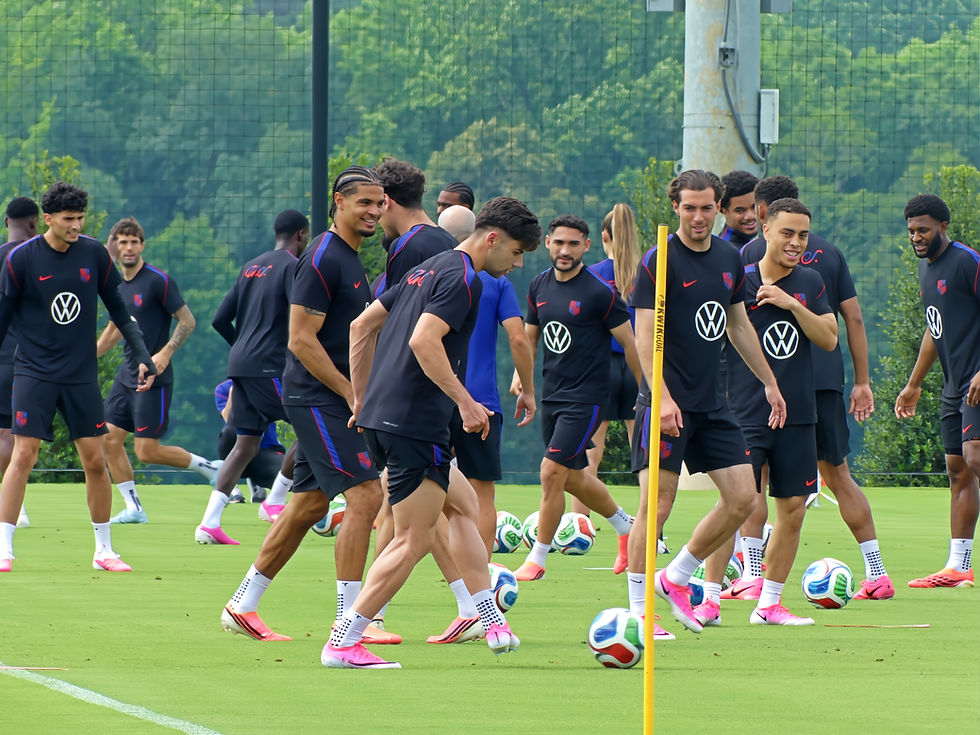
This week, he talked about what this camp feels like. He described it in the texture of small moments, the support staff lined up to greet the players when they get off the bus, Harris Patel, the team's director of performance, waiting for him at the end.
"That man is an energizer bunny," Ream said about Patel. "He brings such an infectious positivity, energy. He comes in every morning, ready to go, pumping guys up, getting guys really ready to put their best foot forward."
Ream tends to be the last one off the bus. Patel waits. There is a handshake and a bear hug and a few cracks on the back, and the coach calls him "old man" and "Papa," and somehow all of that is part of what makes this team different from the ones before it.
This is the brotherhood that Pochettino's camp has spent two years building. Tim Weah called it becoming "the bad guys." Weston McKennie talked about running through walls for the people next to him. And Ream, the oldest one, the one who wasn't supposed to still be here, stands in the middle of it with an armband on his arm and a World Cup on home soil in front of him.
He's been asked whether he will reach out to the players who didn't make the cut, players who will watch the tournament from somewhere else. His answer was honest rather than polished.
"I have not. And I'm more than willing, and will be doing that. But it's been such a whirlwind, 72-plus hours, that it's not that we're not thinking about them. It's just that there's so much that we have to focus on to get ourselves ready."
That's what he actually said. Not a rehearsed line about camaraderie. Just a man telling the truth about where he is emotionally, and acknowledging that the people on the outside of this are in a painful place he doesn't want to pretend he fully understands right now.
He knows what it feels like to wait for that news, and he knows the versions where it goes both ways in the same room. He told the story on The Guuuzan Show. In 2010, the team was in a hotel waiting for individual calls from the coaching staff. He was rooming with a player who came back from his meeting in tears. Ream had to sit with that for a moment, watching his roommate absorb the worst news of his soccer life, before his own phone rang.
"I knew I was walking into a room where I had to almost control my emotions," he said. "I wasn't trying to gloat and be overly excited because my friend and my teammate and my roommate is not going. It was a bit of a tricky situation."
In 2014, it went differently. The team came back from training and guys started getting pulled out of the locker room one by one. It became clear what was happening. Nobody told the players who made it. They told the players who didn't. And you did the math.
This year, walking through a tunnel with his phone blowing up, it was something else entirely.
When Pochettino watched Ream struggle to find words at the captain's announcement, he said afterward that the reaction told him everything.
Pochettino noted that Ream is normally a composed and articulate speaker. Watching him struggle to find words in that moment was the confirmation. You can hand anyone an armband, Pochettino said. That means nothing on its own. But when a person genuinely feels the weight of it, that tells you whether you made the right call.
"When you really feel this type of scene," Pochettino said, "we are right, and we were right to do things like this."
Tim Ream spent most of his international career being grateful just to be in the conversation. He was close in 2010 and 2014, the team failed to qualify in 2018, and then he played four matches in Qatar and anchored a run to the round of sixteen, and he thought that might be it. Instead, it turns out the best version of this story was still coming.
The 2026 World Cup kicks off in the United States this June. Tim Ream will have the armband.
He's been able to feel every moment of earning it.
The USMNT faces Senegal on Sunday, May 31 at Bank of America Stadium in Charlotte before returning to Fayetteville ahead of their opener against Paraguay on June 12 at SoFi Stadium in Los Angeles.
Comments