
"Run Through a Wall": How Pochettino's USMNT Is Building Something Special

Two days into World Cup camp, the USMNT has one consistent message: this group is different. The players can tell you why.

Weston McKennie was on the bus to training on Day 2 of the United States men's national team's World Cup camp when he found himself on a FaceTime call with an old youth coach, sitting next to Alex Zendejas, a teammate he has known for fifteen years. He and Zendejas were chatting with one of the coaches that helped them get to this point in their lives, preparing for a World Cup together. The moment felt ordinary to him. That, he says, is exactly the point.
"Whenever you know the people that you're going to war with," McKennie said Wednesday, "you know their background, their history, their journey, their family, their kids, their wives, that right there is enough basis to be like, hey. I know what this guy did to get here. He knows what I did to get here. Why the hell am I not gonna run through a wall for this guy?"
On the second day of training at the Arthur M. Blank U.S. Soccer National Training Center, the theme that emerged from player after player was not tactics or fitness or schedule. It was identity. A sense, shared across generations and backgrounds within this squad, that something has shifted since Mauricio Pochettino arrived and that it runs deeper than a system or a formation.
The "Bad Guy" Era
Tim Weah put it most directly. The winger, born and raised in New York and deeply shaped by his seasons at Marseille, said Pochettino has introduced something the program was previously missing.
"We were always the good guys, always the nice guys," Weah said. "He's teaching us to kind of be the bad guy. It's a game I like, coming from Marseille, that's what we're all about."
Folarin Balogun used different language but arrived at the same place. The striker described Pochettino as "fierce" and "intense," adding that the coach wants that quality to translate directly into the way the team plays.
Max Arfsten, a left back who has spent his entire national team career under Pochettino and so has no prior U.S. manager to compare him to, offered perhaps the most precise description of what makes the Argentine's approach distinctive.
"He rewards players who take risks and play boldly," Arfsten said. "He gives players freedom to express their qualities, what makes them them, what makes them special."
Together, those three perspectives outline a coherent coaching philosophy: compete with an edge, express yourself within it, and make opponents uncomfortable.
The Brotherhood Underneath
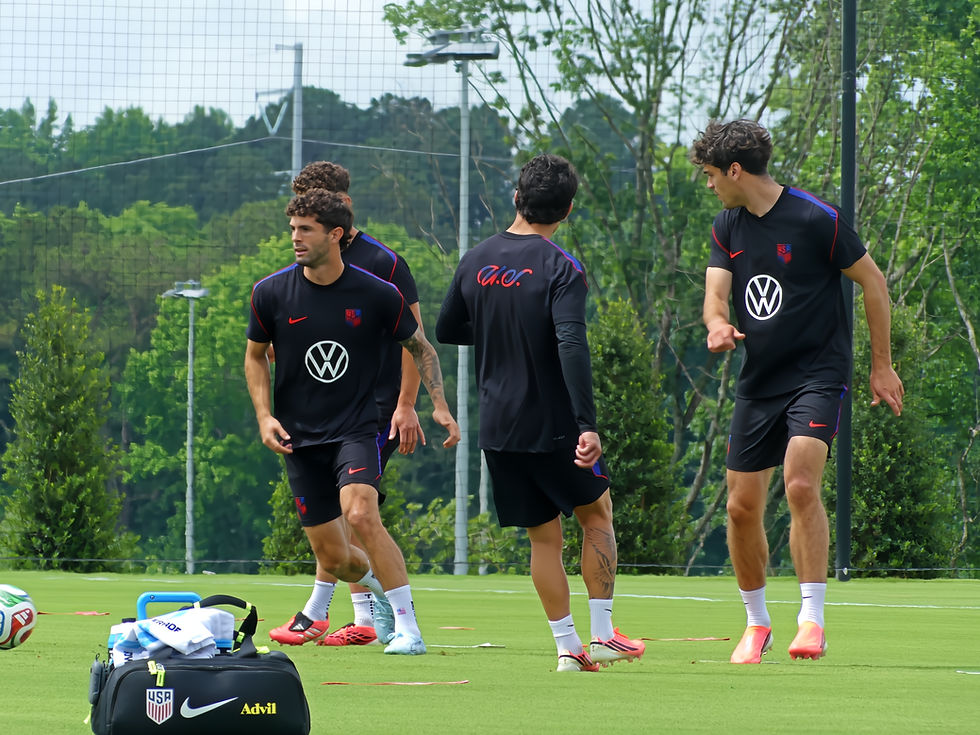
What gives that competitive identity its fuel, the players say, is the depth of the personal connections within the group.
McKennie has known his teammates across different clubs, different countries, and different stages of their careers. He has been to weddings in this group. He spends summers with these players. He traces friendships back to when he was 13 years old.
Weah's connection to Tyler Adams goes back to childhood. They played together at Red Bull from age eight, and Weah was candid about what Adams' return from injury means to him. "How I feel about Tyler is different," Weah said. "Tyler's always been a key piece to the national team and a key piece to my life as well."
Tim Ream, the veteran of the group, described the chemistry in more measured terms but was no less certain about its importance.
"When we're connecting off the field, that momentum spills out onto the field," he said. "It starts in meetings, in hotels, at meals. That's where it all begins."
Arfsten echoed it from a younger player's perspective. "Every good team I've been on has had that," he said. "When you have an emotional connection with people off the field, you understand them more on the field. The person and the player kind of mesh together."
The Personal Stakes

For several players in this camp, simply being here carries its own weight.
Malik Tillman missed the 2022 World Cup and was direct about what that experience cost him. "It wasn't easy for me," he said. "But you always have to keep going." He spoke about a difficult final stretch of the club season at Bayer Leverkusen and what it meant to still receive the call, framing it as recognition of sustained effort across several years.
Arfsten's journey is even more improbable. He walked on at UC Davis, spent time with the San Jose Earthquakes squad in MLS NEXT Pro, and only became a first-choice option at Columbus Crew after his former club coach Wilfried Nancy introduced him to the wing back role. When the call from the national team came Friday, he was eating lunch at the Columbus training facility. He did not fully process it until he was alone, driving home in the rain.
"I started crying," Arfsten said. "I called my mom, told her I made the squad. I was thinking about my childhood, all the little obstacles, moments where I doubted my journey. From UC Davis to here seems so far away."
His message to players grinding through lower levels of the game was simple and without decoration.
"The work you put in when nobody's watching means a lot," he said. "I was at the UC Davis field, just me and a ball and some cones. Things that aren't flashy or sexy. But I truly believe if you put in the work, you'll eventually get there."
What It Adds Up To

The United States opens World Cup group stage play on June 12 against Paraguay. Two friendlies, against strong opponents in Senegal on Sunday and Germany on June 6, come before it. The mood in Fayetteville through two days of camp is not anxious. It is settled.
Pochettino has given this group a competitive identity it previously lacked. The players within it have given each other the trust to act on it. Whether that combination produces results in the tournament is unknowable right now. But the belief is genuine, and it has been built over time, not assembled in the last week.
"Throughout the course of Mauricio coaching us," Arfsten said, "we've just gotten continually closer and closer as a group."
McKennie would put it another way. When you know what the guy next to you sacrificed to stand in that spot, you do not need to be convinced to compete for him.
That part, he said, takes care of itself.


Comments