
The Goldmine American Soccer Refuses to Dig

American soccer has spent decades engineering a system for the smallest possible number of players. The largest, most inclusive, most community-connected version of the game has been ignored the whole time. Georgia just proved what happens when you let it grow.
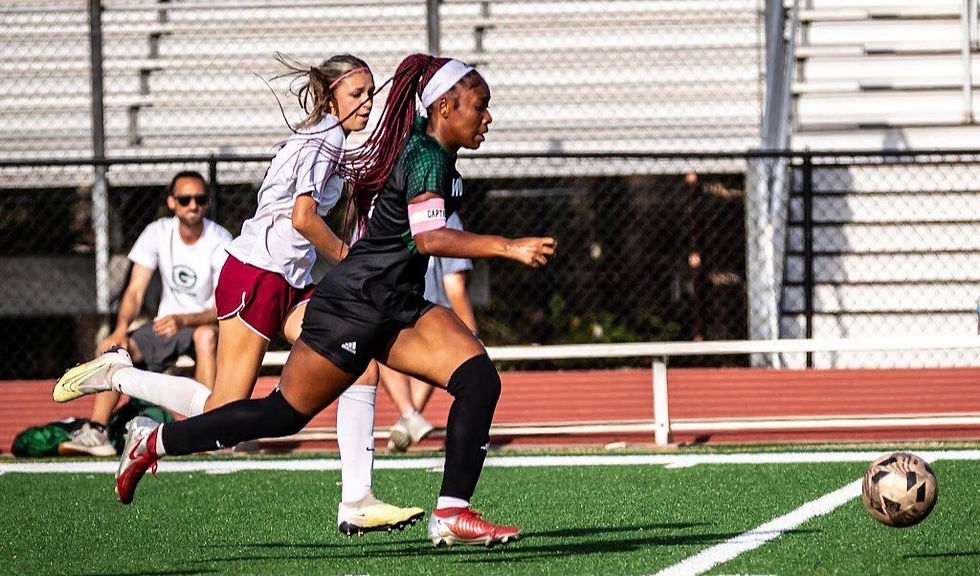
Three years ago, Greenbrier High School walked off a field in Duluth having lost a state championship game 9-0. Three of the seniors on this year's roster were freshmen that night. Aaliyah Silver, Madelyn Heckathorn, and Mackenzie Canady spent the next four years building toward something. They won their third consecutive flag football state championships at Mercedes-Benz Stadium in December. They watched their soccer program climb back. And on a Wednesday afternoon at Duluth High School, they walked back onto the same field against the same opponent and won the first girls soccer state championship in the history of Columbia County.
Nobody outside of Augusta was really talking about it. That needs to change.

Bunky Colvin has been coaching at McIntosh in Fayette County for decades. One of the best players he ever coached was Patrick Murray, who went on to play at Furman. Years after he graduated, Murray came back to the McIntosh locker room before a state championship game and found his old coach. He said: "Do you know what we would give tonight, me and Adam, just to get a chance to go out there and play? We miss this so much. When you're in college, it's a job. But in high school, it's like everybody's in it with you."
Bunky's response to himself in that moment: if high school soccer's doing that, high school soccer's doing it right.
That is the standard the American soccer system should be held to. And right now, it is failing that standard almost completely.
The entire infrastructure of soccer in this country is engineered for a very small number of players. Call it 40-50 kids per birth year who have the potential to play at the biggest clubs in the world or for a national team. The overwhelming majority of dollars, coaching hours, policy decisions, and federation priorities flows toward that group. Everything else is an afterthought.

Here is the problem with that. The best players find their way. Not always because of money, not always because of resources, but because genuine elite talent gets noticed. Academies find it. Scholarships follow it. The infrastructure, imperfect as it is, has enough eyes on enough fields that the kid who is truly going to play professionally is unlikely to disappear entirely. The system was built for that kid, and for that kid, it more or less works.
What the system is starving is everyone else. And everyone else is the whole game.
Bunky Colvin put it plainly: "I see players who only get an elite experience. And then when they hit college, it's like someone slammed the door in their face. They look around, and everybody's as good as them." The elite-only obsession does not even serve its stated purpose well. It produces players who have never learned to fight, never been in a situation where the game was demanding something of them they were not sure they could give. It produces fragility at exactly the moment when the game demands toughness.
The players, the coaches, the fans, the future referees and administrators and parents who will carry this sport to the next generation, they are not coming out of academy programs. They are coming out of school gymnasiums and stadium bleachers and hallways where a kid in a tie walks past a teacher who says, you got a game today? and the kid says, yeah, you should come.
We are ignoring all of them.
School soccer removes the barriers that club soccer builds in.
Transportation. Gone. Facility costs. Gone. Fees that price out entire communities. Gone.
José Rodríguez applied to be a biology teacher at Meadowcreek High School in Norcross. The athletic director discovered he had coached soccer. He took over in December of his first year. Five years later he was in a 6A state championship game. His players come from a community that is predominantly Hispanic and Latino, where student athletes work jobs and miss practice to help their families. The scholarship program his donors fund brought the cost of a $400 Nike package down to $150. Three hundred kids try out every year. The team GPA went from 2.2 to 3.3. He built LSA Norcross, a youth academy, on campus, so that the pipeline would exist inside the community rather than somewhere across town that required a parent with a car and a credit card.
"Nadie creyó en nosotros," the team posted to Instagram after beating Lambert in the state quarterfinals, down a goal, fighting back, going to overtime, winning on penalties. Nobody believed in us. But here we are.
That is not just a team motto. It is a description of how the American soccer system has treated communities like theirs for a generation.
Down in Cordele, Michael McGinnis built Crisp County soccer from 35 kids and no dedicated practice field into a program with 14 different scorers and a defense anchored by three cross country and track athletes who do their track work after soccer practice. The school eventually built them a field and put turf in the stadium. He did it in a football town, in South Georgia, on a shoestring, because a school gave him the platform to do it.
Coach Kristy Versprille at Long County played her entire season without a home field, on late-night bus rides, with three of her top scorers out with ACL injuries, and still finished ranked in the top ten in Triple A on the girls side. She gave her team spring break off for the first time in her coaching career because they were physically and mentally exhausted. She called the resilience they built from it one of the team's defining characteristics.
These things do not happen in club soccer. They happen in school soccer, where the community owns the program, where the gym teacher and the biology teacher and the wrestling coach show up to watch, where the kid who can't afford the club fees or doesn't live near a club can still represent something.
There are a lot of people in American soccer who talk about grassroots. There are a lot of people who talk about community first. There is nothing more real, more authentic, or more inclusive than high school soccer. The barriers everyone laments are already gone. Cost, transportation, facilities. Resolved. School soccer solves all of it.

The barrier that actually hurts high school soccer is attitude.
This game in this country has a gatekeeping problem. Everything is organized around the elite player, or selling the idea of the elite player, or selling the idea of developing the elite player, to play on the elite team in the elite league. Everything else is in the way. That is the operating assumption, and it does enormous damage.
Here is the reality. Building an ecosystem around the smallest sliver of talent, instead of welcoming everyone to find their level and love this game and what it brings into their lives, hollows out the sport from the inside. Rules that prevent players from experiencing what it means to play for their school and represent their community are not development philosophy. They are insecurity dressed up as standards. They are arrogance masquerading as excellence. And they hurt the game that the people enforcing them say they love.
Those rules did not loosen. They tightened. In the last year, the restrictions on players participating in both high school soccer and certain club programs got stricter, not more flexible. I wrote a letter saying exactly why that is a mistake. And while that was happening, Georgia high school soccer had its best season in state history. New champions. New communities represented. A higher level of play than anyone had seen before. The only people who missed out were the kids who were told that playing for their school would hurt them, when the truth is it would have been one of the best things that ever happened to them. A rising tide lifts all boats. The leagues and clubs restricting their players from high school competition are not protecting development. They are protecting territory.
The crowds that showed up all week at Duluth High School for the state championships were not there by accident. They were there because something real was at stake, something that belonged to their school, their town, their community.

Matt Cheaves has coached at Dalton for more than 30 years. He won his 500th career game in March. On Friday night, a huge crowd made the trip from Dalton to Duluth to watch him win an eighth state championship, this time over Midtown. He described what rivalries do in a soccer community: "It brings out people who haven't seen many soccer games, and they come check it out. There's a high school stadium packed with people who are really excited, maybe tailgating in the parking lot. The more games we have like that around the state, the more the high school game is gonna grow."
He is having kids play for him now whose dads played for him. He said that when he was growing up, multigenerational connection to a high school soccer program was unheard of. Now it is the reality in Dalton. He said he remembered as a child listening to his father and uncle talk about playing high school football, going back to see their coach, watching the games after they were grown. "Now in Dalton, soccer is doing the same thing."
That is what a healthy ecosystem looks like. Fans who became fans because their kid played. Coaches who became coaches because a great coach shaped them. Parents in the stands who were players in the stands twenty years ago. The game sustaining and reproducing itself across generations.
That ecosystem does not exist without school soccer. You cannot manufacture it through a club system. It only happens when the game is anchored to a place, a school, a community that people belong to for reasons that have nothing to do with soccer.
There should not be two sets of rules. Referees should not have to bounce between rule books depending on whether it is a school game or a club game. State associations and US Soccer should not be operating in completely separate lanes, ignoring the largest organized youth soccer structure in the country. That is a structural choice, not an inevitability, and it makes everything harder than it needs to be.
The game is already growing in places the system was never designed to reach.

Islands High School is in Savannah. They had never been to a state championship game in any sport, not football, not basketball, not softball. Never. This spring, they came 250 miles up I-16 to Duluth and played for the first state championship in school history. East Hall made the same trip from Gainesville after beating the top seed in the bracket, then the seventh seed, then the third seed, all four wins on the road, as an 18th seed.
Jefferson, out of the Athens area, has been to three state finals in five years.
Dalton, in the northwest corner of the state, just won its eighth title.
Thomasville is making state finals from deep in South Georgia, where coach Lucas Kimmel has spent time with both the boys and girls programs and both won state championships last week.
Coach Marcia Thompson has worked for more than 30 years building something in Trion, a Northwest Georgia community of less than 2,000 people. She described going to dinner in town during championship week and knowing everyone in the restaurant, and everyone knowing what was at stake. That is not a club soccer story. That is a school soccer story.
Greenbrier came from Augusta. First-time champions. First-time in Columbia County history.
The game is already in these places. It is growing there organically, without institutional support, without federation attention, without anyone in a position of national authority pointing resources in that direction. Imagine what it could do if someone actually tried.

Nine members of the Greenbrier soccer roster won a flag football state championship at Mercedes-Benz Stadium in December. Murphy Larkin played on both teams. Aaliyah Silver was the flag football team's leading receiver. Mamie Cate Pangle, the centerback that coach Rob Husted called the literal center of the defense, is a three-time flag football champion. Enzo Osorio-Ochoa at Meadowcreek runs cross country in the fall and won Gwinnett County's Outstanding Senior Athlete award. Lily Gaddy at Jefferson competes in cross country and bass fishing. The Crisp County back line runs track after soccer practice and left the bus to the state semifinals to go compete at sectionals the next day.
Jordynn Dudley plays professionally for Gotham FC in the NWSL. She was an all-region point guard in basketball. Carlos Bocanegra has talked about how playing multiple sports shaped him. The people who came through it know what it gave them.
The club system treats multi-sport athletes as a problem to be solved. School soccer celebrates them. It is the only structure in American youth soccer that naturally produces this kind of athlete, the one who has been in tight games in different sports, who knows how to compete when the environment is loud and the outcome matters and the skill set you need is not the one you trained for this week. That athlete is more resilient, more adaptable, and more mentally prepared for the moments that decide games. You cannot manufacture that in a single-sport academy environment. You can only find it in a school.
The coaches who do not get enough credit. That is where this ends.
José Rodríguez applied to be a biology teacher. Rob Husted was a Navy linguist who deployed to the Middle East through the height of Iraq and Afghanistan, who says the anxiety he feels before a state championship game comes from the same place as preparing for a mission: did he do everything he could for the people counting on him? Matt Cheaves built something in Dalton over 30 years that an entire town drove to Duluth on a Friday night to defend. Molly McCarty has coached at Jefferson for more than 20 years, and her team has been to three state finals in five years. Marcia Thompson has been at Trion for more than 30 years. Bunky Colvin has shaped generations of players in Fayette County, and the best ones come back.
These coaches do not do it for the money. They do it because a school handed them a platform and a community handed them trust, and they took both seriously. High school soccer at its best is not a lesser version of the sport. It is the sport at its most human, the version where the baseball team yells your name in the hallway and the teacher asks who you play tonight and the girls who are going to prom with you later come to the game.

Patrick Murray played at Furman. He went back to Bunky Colvin's locker room before a state championship game, sat in one of the lockers, and said: "There's something about high school soccer that you'll never experience in any other situation."
He was not wrong. And we are leaving it on the table.
The federation and the state associations have to find ways to incorporate school soccer into the greater ecosystem of organized soccer in this country. The investment does not always have to be money. It has to be attention. It has to be importance. It has to be the recognition that the thousands of people who filled the stands at Duluth all week are not peripheral to this sport. They are the sport.
If high school soccer is doing that, high school soccer is doing it right.
It is time to act like it.


Does anyone know how many ppl were at the Walton - Medowcreek chnapuonsho game in Duluth? I was thinking ab 2,500 but can’t confirm
So what’s the solution to making HS soccer more competitive than club? Let all kids play HS soccer? Everyone doesn’t have the same path, agreed that this would solve many problems but I don’t think it would create more elite players on the global stage unless the coaching improved dramatically, more akin to what I see at private schools where sports has high quality coaching that is on the cutting edge of the evolving nature of the game. I simply don’t see that at the HS level where I live at all. Club is far superior to development at this point so HS just catch up if it’s going to offer a pathway for the best players in the world.
Jason Moore arguably the best youth player in GA history is the best example of youth players wanting to play in HS. He made the US U-17s as a 14 year old and made Playing at Parkview HS as a priority to his National Team coach astonishment.