
The History of Soccer in Atlanta: How the South's Biggest City Became a Soccer Town

Updated: May 16
"When you say you're with Atlanta, then people know and understand. Atlanta is U.S. soccer to people around the world." — Vic Rouse, Atlanta Chiefs head coach, February 1969
Atlanta did not discover soccer when Atlanta United arrived. Atlanta United discovered what had been here all along. This is that story.
The history of soccer in Atlanta stretches back more than a century, to immigrant communities kicking a ball at Piedmont Park in 1908 and a handful of Scotsmen and Englishmen who refused to let the game disappear from a city that did not yet know it needed them. When a professional soccer team was announced for Atlanta in 1966, officials estimated that around 150 people were playing soccer regularly in the area. By the time the Chiefs won the North American Soccer League championship in September 1968, the brand new state association estimated that 8,000 kids and adults were playing regularly. Today that number sits at around 135,000 according to Georgia Soccer. The seemingly overnight success of Atlanta United was the product of many seeds planted by teams like the Chiefs, the Apollos, the Generals, the Ruckus, the Silverbacks, the Attack, the Magic, and many more. This page is the Soccer Down Here reference document for that full history, organized era by era. Each section links to deeper coverage where it exists.
The Early Days: Soccer in Atlanta in the Early 1900s
The first documented soccer match in Atlanta took place on April 4, 1908, when the Atlanta association football team traveled to Lithonia and lost 4-1. The Atlanta Journal reported the game on April 5, noting that Atlanta had the ball most of the match but were unable to convert, and that the players were "royally entertained by their victors" afterward. The article also revealed the ambition already present in the sport's early organizers: "Next season it is hoped that a league of four teams can be organized and a game played each Saturday." That league took a few years longer than hoped, but it did follow. By September 1908, P.W. Harland was organizing new teams and inviting interested players to contact him by telephone. The Atlanta Soccer Football Club was formally organized in December 1911, with its headquarters at the A.G. Spalding & Bros. store on North Broad Street, which served as the club's meeting place and general base of operations throughout the early years. By 1912-13, the club was prominent enough to be featured in Spalding's Official Soccer Foot Ball Guide, the national rulebook and annual record of the sport in America. Pat Harland of Atlanta, Ga., wrote the entry himself, titled "Soccer Foot Ball in the Central South." He named the fathers of the game in Atlanta directly: Dodd Simpson, Jimmy Hogg, Alec Strachan, Jim Grant, Jack Harland, Pat Harland, Eddie Worrell, Joe Hall, Billy Kelly, and Billy Jackson. The club's officers at that time were President Cyril Smith, Secretary and Treasurer Eddie Worrell, Manager Joe Hall, and Captain W.C. Kelly. The team that season beat Fort McPherson twice, Chattanooga, and Auburn University twice. Atlanta was not just playing soccer. It was the established soccer capital of the American South, and the people running the club knew it. The Spalding's Guide entry also credited the Atlanta Journal and Atlanta Constitution by name for giving the game prominent coverage from its earliest days, which is why the documentary record of early Atlanta soccer is as rich as it is. A Georgia State League with four clubs was running by 1913. Grammar school leagues formed. Marist College became an early home for the sport. By 1914, a local booster could write with confidence: "Watch soccer grow." The foundation being laid in these years was real, even if almost no one outside the city's small British immigrant community knew it was happening.

The Barren Time: 1930 to 1957
After the First World War took most of the Atlanta soccer community's active players overseas, the game retreated into near invisibility. The 1920s offered sporadic signs of life. A reorganized league appeared briefly. A club composed of cotton industry workers from Liverpool kept the game going for a season or two. Piedmont Park hosted the occasional pickup match between men who had played the game before coming south. But there was no infrastructure to sustain it, no institutional home, and no audience beyond the players themselves.
Atlanta in these years was a city in the process of becoming something else entirely. The population grew from around 200,000 in 1930 to over 300,000 by 1950, with the metro area expanding rapidly into the surrounding counties. The city's identity was bound up in commerce, in the railroads and later the highways, in the construction of a civic mythology built around the idea that Atlanta was the capital of the New South. Sports meant college football, specifically Georgia and Georgia Tech, and the minor league baseball of the Atlanta Crackers at Ponce de Leon Park. Soccer was not part of that story. It was not part of any story being told about Atlanta during those years.
The game survived in the margins. Emory University had intramural activity. A handful of high schools experimented with it as a physical education exercise. The occasional newspaper item noted a match somewhere in the metro area, as if reminding readers that the sport had not entirely vanished. But for the three decades between the two world wars and into the early 1950s, organized soccer in Atlanta was essentially a rumor. The city was growing fast and looking forward. Soccer was not part of where it thought it was going.
That began to change in 1958, when Emory University made a decision that would eventually alter the trajectory of the entire city's sporting life, though no one knew it at the time.
Slow Growth: 1958 to 1966
The turning point came quietly in 1958, when Emory University became the first college in Georgia to form a varsity soccer program. Westminster School had already launched a team under coach Bob Sims, who would stay for 34 years. By 1965, soccer was officially recognized as a varsity sport by the Georgia High School Association, and Westminster won the first GHSA boys championship in 1966 with 20 schools fielding teams. The game was growing in the suburbs, seeded by immigrant coaches and club players who had carried it from elsewhere. It was still a minor sport in a football state. But it was no longer invisible.
The summer of 1966 proved to be a critical accelerant. The World Cup final was televised in the United States for the first time, creating a groundswell of interest in a professional league at exactly the moment Atlanta was looking to fill open dates at its brand new Atlanta Stadium. The Braves and the Falcons had given the city major league status. Soccer was seen as the next piece. Atlanta entered a team into the National Professional Soccer League and the stage was set.
Atlanta Chiefs, Version One: 1966 to 1972
When the Atlanta Braves organization announced a professional soccer team in 1966, there were eight high school teams in the metro area and roughly 150 people playing organized soccer in the city. Dick Cecil, a Nebraska native who came to Atlanta with the Braves, was tasked with building the soccer side of the business. He knew he needed the right soccer person to lead it and found him in Phil Woosnam, a university-educated professional player and Welsh international who understood from the start that his mission was not just to win games but to sell a sport to an audience that had never seen it.
To prepare the local media for what was coming, Cecil and Woosnam arranged a press trip to London ahead of the Chiefs' first season. Among those who made the trip was the legendary Larry Munson. Jesse Outlar of the Atlanta Constitution watched West Ham play at the Boleyn Ground and compared the atmosphere favorably to a college football game at Sanford Stadium. These were the men who would tell Atlanta what to think about this new team, and Cecil made sure they understood what they were going to see before they had to write about it.
The Chiefs' first home game on April 22, 1967, drew 11,293 fans to Atlanta Stadium. Furman Bisher of the Atlanta Journal described the crowd as having "more beards in the group, more of the apparent hungering intellectuals, pseudo or real, and more youth" than the Braves and Falcons were drawing. It was a different Atlanta showing up, and Phil Woosnam scored the first goal in Atlanta professional soccer history to give the crowd something to celebrate in a 1-1 draw with San Diego.
The Chiefs did thousands of camps and clinics during those early years, essentially creating high school soccer in Georgia, helping inspire nearly one hundred new programs within a few years. They also helped establish the state association and leagues that continue to this day. The player recruitment reflected that community mission: the Chiefs signed players who spoke English so they could take part in those clinics, but they also led the way in recruiting from Africa and the Caribbean. Henry Largie of Jamaica eventually settled in Atlanta permanently and coached generations of players who came after him. Kaizer Motaung arrived from South Africa, fell in love with the city, and when he returned home used the Chiefs' name and badge as the template for his own club. The Kaizer Chiefs are one of the largest soccer clubs in South Africa today.
In 1968, the Chiefs hosted English champions Manchester City for two matches and set a then-record for Atlanta soccer attendance when Santos and Pelé came to town. The Chiefs won the NASL championship that year, defeating San Diego 3-0 in the deciding match. They reached the finals again in 1969 and 1971. When the Braves finally pulled the plug in October 1972 after losses exceeding a million and a half dollars, Dick Cecil said the growth of local soccer interest had not been reflected in attendance at league games. He was right, but he was measuring the wrong thing. What the Chiefs had built in the community could not be undone.

Mid-1970s: The Atlanta Apollos and Grassroots Growth
In January 1973, the Atlanta Apollos replaced the Chiefs in the NASL. The team was owned by the Omni Group, owners of the Hawks and Flames and a group already interested in the emerging possibilities of professional indoor soccer. They played outdoors at Grant Field at Georgia Tech and hosted a few indoor exhibitions at The Omni, but struggled even more than the Chiefs to find a foothold in what was becoming a more crowded professional sports scene in Atlanta. Upon announcing they would not return for 1974, Omni Group president John Wilcox said plainly: "I simply don't have enough time or enough smarts to operate a soccer team at this time."
Professional soccer did not exist in Atlanta from 1974 to 1978, but the work done in the Peach State continued to compound beneath the surface. Phil Woosnam's steady hand as NASL commissioner helped the league reach genuine national prominence when Pelé joined the New York Cosmos in 1975. By the mid-1970s, an estimated 17,000 youth players were registered in Georgia. The Atlanta District Amateur Soccer League was active. The suburban families who had watched Chiefs players coach their kids were now running leagues of their own.
Atlanta Chiefs, Version Two: 1978 to 1981
Dick Cecil watched the NASL boom from afar and believed the seeds planted in the late 1960s might finally be ready to bloom. He partnered with Al Thornwell and convinced Braves owner Ted Turner to bankroll buying the Colorado Caribous and moving them to Atlanta to bring the Chiefs name back. The second Chiefs played at Atlanta-Fulton County Stadium and later at Tara Stadium in Clayton County before finishing their days at DeKalb Memorial Stadium, where they drew 14,437 for a match against Fort Lauderdale in 1981, their largest crowd and a franchise record.
The indoor version of the team won the NASL's Eastern Division in 1980-81, playing to strong crowds at The Omni. But the NASL was starting to slip after Pelé's retirement, and some owners were spending recklessly rather than building sustainable operations. Cecil attempted to work with Woosnam to rein in the league's spending, but ran out of time. Turner ran out of patience and needed capital to launch Headline News on cable television. The Chiefs folded in August 1981 after two successful indoor seasons, a Southern Division title outdoors, and a playoff exit to Jacksonville. Turner estimated total losses of seven million dollars across the franchise's three years. The era still produced American-born players, genuine supporter communities in DeKalb County, and a soccer infrastructure that stretched from high school programs to adult amateur leagues.
The 1980s: Georgia Generals, Atlanta Attack, and the Youth Club Explosion
A new ownership group tried professional soccer on a smaller scale in 1982 with the Georgia Generals in the American Soccer League, basing themselves in what had become a hotbed for soccer in the area: DeKalb County. They played at Memorial Stadium, having worked out a deal with the school board after seeing the Chiefs draw over 14,000 fans there late in the 1981 season. Kevin Fouser of Parkview High School was their local star, one of the first native Georgians to sign a professional soccer contract. The Generals nearly ran out of money in the middle of the season. When they were eliminated in the ASL playoffs by the Detroit Express, the series went to a third game in Detroit only because parents of players paid for the extra night in the hotel to keep their sons' season alive.
Through the rest of the decade, the Atlanta Datagraphic amateur club became the dominant soccer organization in the region, reaching national championships and producing players who would go on to professional careers. Youth clubs multiplied across the suburbs. The Georgia Youth Soccer Association, formed in 1974 with 200 players, registered tens of thousands by the end of the decade. And in 1989, professional indoor soccer returned with the Atlanta Attack, who drew 10,462 fans to The Omni for their home opener. Bob Moreland, the team's president, said at the launch: "If Atlanta makes it, soccer will have made it in America."
The 1990s: The Magic, the Ruckus, the Olympics, and the Birth of the Silverbacks

The 1990s were the most consequential decade in Atlanta soccer history before 2017, and they opened with the Atlanta Magic setting the tone. The Magic won three straight USISL indoor championships from 1993 to 1995, running a lean, player-driven operation that became the model for how to keep professional soccer alive in a city that kept losing it.
The Atlanta Ruckus made noise in their initial build-up for the 1995 season, and not just with the very 1990s-sounding name. They were everywhere on billboards, radio, and TV, with a clever advertising campaign that mocked the other professional sports teams in town. However, ownership failed to post the required letter of credit with the league and with weeks to go before the season started, the team nearly disappeared before playing a single game. Johnny Immerman rescued the franchise and they put together a wild ride of a season built around a roster heavy with US national team veterans, coming up short in the A-League championship series against the Seattle Sounders.
That playoff run came and went. Ownership issues continued to hamper the Ruckus through 1996 when Immerman left the team for dead after trading or selling off the bulk of the roster. Vincent Lu bought what was left from the league late in the 1996 season and moved them to the old Roswell High School stadium for the 1997 season. Consistent battles with the league, bounced checks, and a lack of professionalism from ownership decimated the club going into 1998 as they moved back to Adams Stadium. The league took control of the team after Lu refused to send them on a scheduled road trip in mid-season. After the club survived on its letter of credit for the rest of the season, John Latham and Bobby Glustrom stepped in, purchased what remained, and renamed the team the Atlanta Silverbacks for the 1999 season. Atlanta had its longest-running professional soccer club, even if almost no one realized it at the time.
The decade's most significant soccer moment had nothing to do with any of those clubs. In the summer of 1996, Sanford Stadium in Athens hosted Olympic soccer matches that drew crowds exceeding 86,000 for the men's gold medal final and 76,000 for the women's gold medal match, where the US defeated China 2-1. The women's gold medal game remains one of the landmark moments in the history of women's soccer worldwide, and it happened in Georgia. The seeds planted by the Chiefs, the amateur leagues, and the suburban youth programs of the previous three decades had produced an audience large enough to fill a stadium that size for a soccer match. Atlanta proved something that day that it would spend another twenty years trying to prove again with a professional team.
The Atlanta Beat and the WUSA: 2001 to 2003
The Atlanta Beat launched in the Women's United Soccer Association in 2001, owned by Cox Enterprises and playing at Bobby Dodd Stadium on the Georgia Tech campus. They drew 20,170 for their home opener, the largest opening-day crowd for a professional soccer team in Atlanta history to that point. They averaged nearly 12,000 per game across that first season, reached the WUSA Founders' Cup championship match, and lost to the Bay Area CyberRays. The following season they moved to Herndon Stadium on the campus of Morris Brown College, hosted the Founders' Cup championship match in 2002, and reached the final again in 2003 before losing to the Washington Freedom in overtime. When the WUSA collapsed in September 2003, the Beat went with it. The league's failure was a business story, not an Atlanta story. The crowds the Beat drew, particularly in that first season at Bobby Dodd, demonstrated definitively that Atlanta would support women's professional soccer at a serious level when given the chance.
The Beat returned for a second act in 2010 as part of the newly formed Women's Professional Soccer league, this time under new ownership and with a new home: a purpose-built soccer stadium on the campus of Kennesaw State University. The WPS Beat opened the KSU Soccer Stadium that spring, drawing over 7,000 for their home opener and hosting the WPS All-Star Game in 2010. The league folded before the 2012 season and the Beat ceased operations with it. But the stadium they built at Kennesaw State endured. It became the home of the Kennesaw State Owls soccer programs and has hosted US national team matches, international friendlies, and hundreds of matches in the years since. It is the most tangible physical legacy left by any women's professional soccer club in Atlanta history, and it exists because a women's pro team believed in this city enough to build something permanent. The NWSL has since awarded Atlanta a franchise, a decision the Beat's attendance records helped make inevitable.
Atlanta Silverbacks Era One: 1999 to 2008
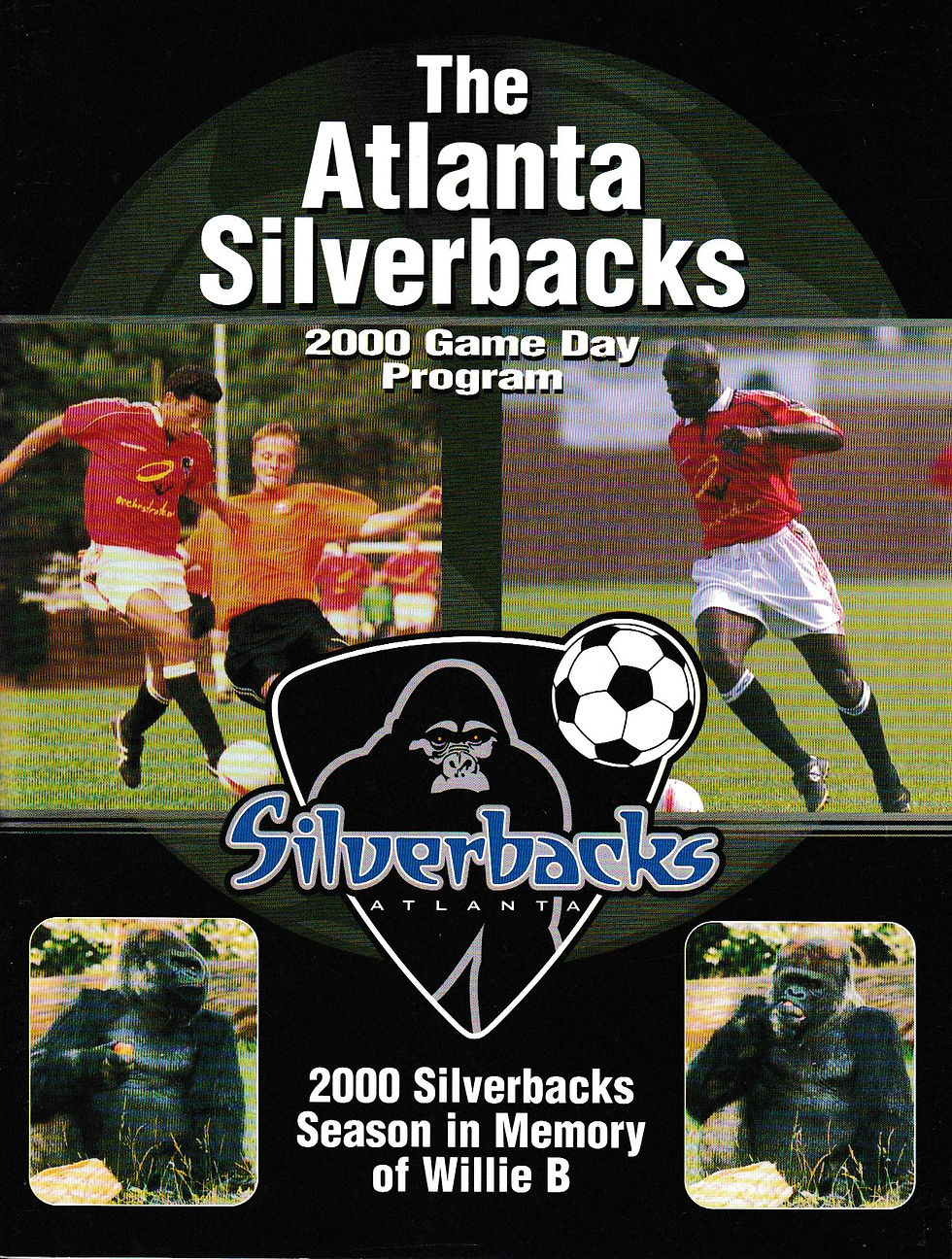
The Silverbacks played at DeKalb Memorial Stadium in their early years before moving to their own purpose-built facility at Atlanta Silverbacks Park in 2006. The club built genuine supporter culture and a real connection to the city's growing soccer community, competing through multiple league configurations and surviving ownership changes. Iggy Moleka became the all-time leading scorer in Atlanta professional soccer history during this era, a record that stood until Josef Martínez arrived a decade later. The Silverbacks drew passionate crowds, produced competitive soccer, and quietly became the backbone of a professional infrastructure that, even when imperfect, kept the game alive and visible in Atlanta through a period when it might otherwise have disappeared entirely.
Most significantly, the Silverbacks became the first professional soccer team in Atlanta history to build their own dedicated stadium, a facility that the overwhelming majority of the region's soccer-playing youth and adults would use over the next twenty years.
Atlanta Silverbacks Era Two, NASL: 2011 to 2015
The Silverbacks joined the relaunched North American Soccer League in 2011, giving Atlanta a presence in what was briefly positioned as a credible alternative to MLS. The club won the NASL Spring Season title in 2013 and hosted the NASL Soccer Bowl championship match at Silverbacks Park that fall, losing 1-0 to the New York Cosmos in front of 7,211 fans. In the US Open Cup, the Silverbacks made the deepest run by a Georgia team in the tournament's history, defeating Real Salt Lake and the Colorado Rapids of MLS before losing to the Chicago Fire in the 2014 quarterfinals. When the Silverbacks folded in 2015, it was not because Atlanta lacked a soccer audience. It was because something much larger was already coming.
The Announcement and the State of Atlanta Soccer in 2014
When Arthur Blank announced an MLS expansion franchise for Atlanta on April 16, 2014, at a press conference in downtown Atlanta, the city was not starting from zero. It was arriving at a moment after more than a century of accumulated foundation. Youth infrastructure was deep and competitive, producing players who would go on to professional and national team careers. Immigrant communities, from the Latino leagues in Gwinnett and Chamblee to the West African clubs on the south side, had been playing the game for generations. A professional supporter culture, however small, already existed. The grassroots soccer infrastructure that Phil Woosnam and the original Chiefs had helped build in 1967 had compounded through every decade since. The announcement connected all of that to the resources and platform needed to make it matter at a national and global scale.
Atlanta United and the Epicenter: 2017 to Now

https://www.soccerdownhere.net/blog/categories/atlanta-united-fc arrival in 2017 did not create Atlanta's soccer culture. It revealed it. The Five Stripes broke MLS single-season attendance records, won the MLS Cup in their second season, signed players like Miguel Almirón and Josef Martínez who became genuine stars, and made Atlanta the primary conversation when anyone discussed the future of soccer in North America. The supporter culture that built itself around the team drew on the city's music identity, its demographic diversity, and a generation of Atlanta-raised players who had grown up in the youth infrastructure that the previous decades had built.
Vic Crowe, assistant coach of the 1968 NASL champion Atlanta Chiefs, had said of that city: "Atlanta is American soccer." It took another fifty years for the rest of the country to agree with him. With the 2026 FIFA World Cup coming to Mercedes-Benz Stadium, the story is not finished. It is entering its most consequential chapter.
Further Reading from the Soccer Reference Desk
Ted Turner's Atlanta soccer story few know The 1996 Olympic Soccer Tournament (Coming Soon)
The Atlanta Silverbacks: The Complete History (Coming Soon)


Comments